What Are the Top Parts Equipment Suppliers in China?
Choosing the right parts equipment supplier in China requires more than comparing online prices. Buyers must examine manufacturing capability, quality controls, communication, and long-term reliability. This article explores leading Chinese suppliers and explains what makes them valuable for international procurement teams.
A dependable supplier should provide clear product specifications, stable tolerances, and traceable materials. Factory experience matters, especially for machined parts, hydraulic components, electrical assemblies, and industrial replacement parts. Buyers should review certifications, inspection records, production equipment, and sample quality before placing large orders. A video factory tour can reveal practical details, such as organized workstations, calibrated measuring tools, and labeled inventory areas.
Small details matter.
The best parts equipment suppliers usually support custom drawings, prototype testing, packaging requirements, and export documentation. They should also communicate realistic lead times instead of promising everything immediately. Customer references can offer useful evidence, although testimonials are not always complete or independent. That limitation deserves attention. A supplier may perform well for one industry but struggle with another product’s tolerances, volume, or compliance needs.
This guide compares suppliers through practical criteria, including product range, engineering support, inspection procedures, production capacity, delivery performance, and after-sales service. It also considers whether a supplier can adapt when specifications change. No ranking can suit every buyer. A company seeking automotive components may need a different partner from a construction equipment distributor. Careful verification remains essential. The strongest decision combines documented evidence, direct communication, and a small trial order before full-scale cooperation.
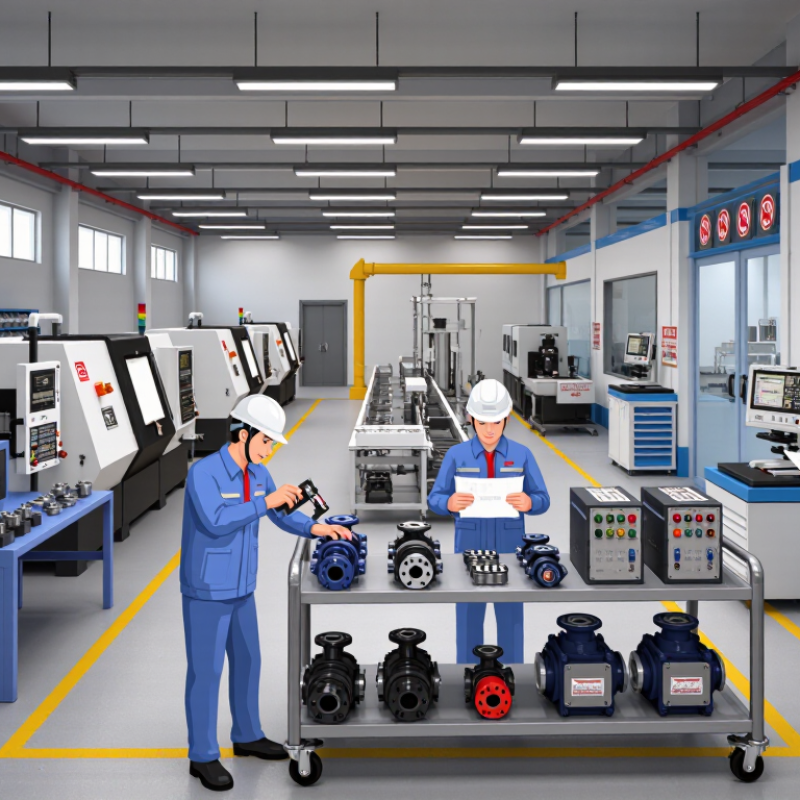
Market Scope: Parts, Components, and Equipment Suppliers in China
What Are the Top Parts Equipment Suppliers in China?
Market Scope: Parts, Components, and Equipment Suppliers in China
China’s industrial supply market covers a wide range of parts, components, and complete equipment. Common categories include machined parts, castings, stamped metal components, electrical assemblies, hydraulic units, and automation equipment. Many suppliers serve construction, energy, transportation, manufacturing, and agricultural machinery sectors. Their capabilities can differ sharply, even within the same product category.
Experienced buyers usually assess more than price. They review drawing interpretation, material traceability, production capacity, inspection tools, and delivery records. A reliable supplier should provide samples, dimensional reports, process documents, and clear responses to technical questions. Factory audits can reveal practical details, such as equipment maintenance, storage conditions, and worker training.
Small details matter.
Equipment suppliers may offer standard machines or configure systems for a specific production line. Buyers should confirm operating limits, spare-parts availability, installation support, and training terms before placing an order. Communication also deserves careful testing. A polished quotation does not prove engineering strength. In some cases, unclear specifications create avoidable delays. I have found that simple drawings, agreed tolerances, and staged inspections reduce these risks. Still, no supplier assessment is perfect, and changing production conditions require regular review.
Industry Scale: China Produced 31.28 Million Vehicles in 2024 (CAAM)
What Are the Top Parts Equipment Suppliers in China?
China produced 31.28 million vehicles in 2024, according to the China Association of Automobile Manufacturers. That figure creates enormous demand for stamping dies, injection molds, CNC systems, assembly tools, and inspection equipment. The scale is enormous. At this production level, even small equipment delays can affect thousands of components each day.
Leading suppliers usually specialize in one technical area rather than offering everything. Die makers support body panels and structural parts. Mold manufacturers produce precise tools for dashboards, lighting housings, and interior components. CNC equipment suppliers focus on repeatable machining, while testing-equipment makers verify dimensions, hardness, and surface quality. Buyers should examine tolerance records, maintenance response, spare-part availability, and factory capacity before signing contracts.
In supplier audits, engineers often inspect machining accuracy, calibration labels, and production records. A credible supplier can explain material grades, heat-treatment procedures, and inspection frequency. Documentation matters. Certifications can support trust, but they cannot replace physical samples and process checks. Some workshops present polished showrooms yet provide weak traceability. Quality still varies. This is where careful buyers can make mistakes, especially when comparing low prices with long-term operating costs. A trial order, measured against approved drawings, often reveals more than a sales presentation.
What Are the Top Parts Equipment Suppliers in China? — Industry Scale: China Produced 31.28 Million Vehicles in 2024 (CAAM)
Supplier-oriented market indicators for evaluating automotive parts, manufacturing equipment, testing systems, and production-line opportunities in China.
| Market Segment |
2024 Output / Volume |
Share of Total |
Year-on-Year Change |
Implication for Parts & Equipment Suppliers |
| Total automobiles |
31.282 million vehicles produced |
100.0% |
+3.7% |
Provides the overall production base for body, chassis, powertrain, electronics, assembly, inspection, and factory-automation equipment. |
| Passenger vehicles |
27.477 million vehicles produced |
87.8% |
+5.2% |
The largest addressable segment for stamping, welding, painting, interior, thermal-management, battery, and final-assembly equipment. |
| Commercial vehicles |
3.805 million vehicles produced |
12.2% |
−10.4% |
Demand is concentrated in heavy-duty components, axles, braking systems, suspension, cab structures, and fleet-oriented service equipment. |
| New-energy vehicles |
12.888 million vehicles produced |
41.2% |
+34.4% |
Supports demand for battery-pack assembly, electric-drive systems, high-voltage testing, thermal management, lightweight structures, and automated inspection. |
| Automobile exports |
5.859 million vehicles exported |
18.7% of production |
+19.3% |
Creates additional requirements for quality-control systems, export-compliance testing, packaging, logistics automation, and scalable production capacity. |
| Domestic automobile sales |
Approximately 25.577 million vehicles sold domestically |
81.3% of production |
Growth supported by new-energy demand |
Indicates a large installed base for aftermarket components, repair equipment, diagnostic systems, and replacement-parts manufacturing. |
| Automotive manufacturing scope |
Vehicle production plus component production |
Not separately quantified here |
Varies by product category |
Relevant supplier categories include machining, casting, forging, stamping, welding, coating, assembly, metrology, testing, robotics, and industrial software. |
Supplier Criteria: Revenue, Capacity, IATF 16949, and Delivery Coverage
Choosing top parts equipment suppliers in China requires more than a large revenue figure. Revenue can indicate financial stability, but it does not prove consistent production. Ask for audited financial information, recent customer references, and evidence of investment in equipment. A supplier with stable cash flow can maintain tooling, skilled staff, and essential maintenance.
Capacity must match your real demand, not an impressive factory tour. Review machine lists, available shifts, monthly output, and bottleneck processes. Check whether critical operations are handled internally or outsourced. Request a capacity plan for peak seasons. Small details matter. One missing machine can delay an entire shipment.
IATF 16949 certification is a strong quality signal for automotive-related parts. Verify the certificate’s validity, approved site, and covered processes. Then examine control plans, inspection records, traceability labels, and corrective-action reports. Certification alone is not enough. Delivery coverage also deserves practical testing. Confirm export experience, packaging standards, destination support, and quoted lead times. A supplier may promise worldwide delivery but lack regional inventory or dependable freight coordination.
Run a pilot order before signing a long-term agreement. I have seen supplier evaluations overvalue factory size and undervalue communication speed. That mistake deserves review. Ask how quickly the team reports defects, revises schedules, and handles engineering changes. Reliable suppliers provide clear answers, measurable data, and evidence rather than polished promises.
Leading Companies: CATL, BYD, Weichai, Fuyao, and Wanxiang
China’s leading parts suppliers cover batteries, electric drivetrains, commercial-vehicle systems, automotive glass, and chassis components. The IEA’s Global EV Outlook 2024 reported that China produced more than half of global electric cars in 2023. It also held nearly 80% of worldwide battery cell manufacturing capacity.
Battery suppliers compete through cell chemistry, thermal control, and production scale. Drivetrain manufacturers focus on motors, transmissions, and heavy-duty reliability. Commercial-vehicle specialists often support trucks and buses, where torque matters more than compact design. Glass producers add laminated windshields, acoustic layers, and camera-ready surfaces. Large component groups provide suspension, steering, and safety modules across many vehicle platforms.
Look closely at the factory floor. Traceability should connect each batch to a process record. A strong supplier also reports warranty data, audit results, and testing limits. Industry teams commonly check salt-spray resistance, vibration performance, dimensional accuracy, and battery thermal behavior before approval. The China Association of Automobile Manufacturers reported over 30 million vehicle sales in China during 2023, creating a large validation base for these suppliers. Still, scale is not everything. Some published supplier claims remain difficult to compare because testing methods differ. That weakness deserves more attention.
A practical sourcing review should examine delivery stability, engineering response time, software support, and replacement-part availability. Cheap quotations can hide tooling changes or slower corrective action. Reliability is built in small details.
Supplier Comparison: Pricing, Export Data, Lead Times, and Warranty Terms
What Are the Top Parts Equipment Suppliers in China?
Comparing parts equipment suppliers in China requires more than checking the factory quotation.
A lower unit price may hide tooling fees, high minimum orders, or expensive inland transport. Request pricing under the same Incoterm, currency, quantity, and quality standard. Compare landed cost, not the first number shown.
Low prices can mislead.
Export data offers useful evidence.
Public customs records can reveal shipment frequency, product categories, and destination markets. However, trading companies may appear in these records instead of manufacturers. Ask for recent export references, packing photos, and sample shipping documents with sensitive details removed.
A supplier showing regular quarterly shipments may handle documentation better, but export volume does not prove technical quality.
The data has limits.
Lead times should be separated into sampling, production, and delivery.
Typical estimates may range from
7–15 working days
for samples and
20–35 days
for standard orders.
Customized parts can require
45–75 days.
Confirm capacity before paying a deposit.
Warranty terms deserve the same attention as price.
Look for a clear coverage period, replacement rules, inspection procedures, and response deadlines. Some suppliers offer 12 months, while others negotiate longer coverage for critical equipment.
Ask who pays return freight and whether labor costs are included. Keep drawings, inspection reports, material certificates, and batch numbers together. Independent pre-shipment inspection can reduce disputes.
In practical sourcing, delays often follow design changes, not factory negligence. That possibility deserves honest discussion.
A supplier that explains risks clearly may be more dependable than one promising everything.