How to Reduce Agricultural Equipment Maintenance Costs?

Reducing agricultural equipment maintenance costs is not about postponing every repair. It is about preventing small defects from becoming expensive failures during planting or harvest. A loose belt, clogged radiator, or underinflated tire can quietly reduce performance for days. Then, one morning, the tractor stops beside a muddy field.

John Moubray, a respected maintenance strategist and author of Reliability-Centered Maintenance, wrote, “Maintenance is ensuring that physical assets continue to do what their users want them to do.” This principle applies directly to agricultural equipment maintenance. A combine should harvest efficiently. A sprayer should apply accurately. A tractor should deliver dependable power without unnecessary downtime.

Practical savings begin with simple observations. Check hydraulic hoses for fresh oil marks. Clean dust from air filters before engine temperatures rise. Inspect grease points, bearings, and tire pressure according to the manufacturer’s guidance. Record operating hours, repair dates, parts used, and recurring symptoms. These notes turn memory into useful evidence.

Preventive maintenance is rarely perfect. Operators may miss a warning light or delay a scheduled inspection during a narrow weather window. That happens. However, ignoring repeated problems usually costs more than fixing them early. A cracked hose replaced in the workshop may cost little. The same hose failing during harvest can damage nearby components, delay workers, and require emergency shipping.

This guide explores practical ways to control agricultural equipment maintenance costs without sacrificing safety, reliability, or field performance. Some recommendations may need adjustment for older machines, harsh soil, or limited service support. That is worth acknowledging. The cheapest plan is not always the most dependable one.

How to Reduce Agricultural Equipment Maintenance Costs?

Understanding the Main Drivers of Agricultural Equipment Maintenance Costs

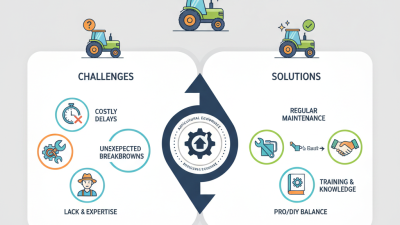
Agricultural equipment maintenance costs rarely come from one failure. They usually grow from several small operational choices. Machine age, working hours, soil conditions, and operator habits all influence the final bill. A tractor working in wet clay faces different stress than one used on dry, sandy ground. Dust can enter filters, while moisture accelerates corrosion around electrical connections.

Preventive maintenance is another major cost driver. Skipping a daily inspection may save ten minutes, but it can create expensive downtime later. Worn belts, low tire pressure, and contaminated hydraulic fluid often appear minor at first. They are not always minor. Service records help identify repeated problems, repair frequency, and parts with unusually short lifespans. I have seen maintenance plans fail because they followed calendar dates rather than actual engine hours. That assumption deserves review.

Labor and downtime also deserve careful measurement. A low-cost repair may become expensive when equipment misses a narrow planting or harvest window. Skilled technicians usually diagnose problems faster, yet rushed work can cause repeat failures. Clear checklists, proper torque settings, and clean storage areas reduce avoidable mistakes. However, maintenance budgets should not rely on perfect behavior. Operators forget steps, especially during long shifts. Designing simple inspections around real working conditions is more reliable than adding complicated paperwork. Costs become easier to control when managers track fuel use, operating hours, failure patterns, and environmental exposure together.

Creating a Preventive Maintenance Program for Farm Machinery

How to Reduce Agricultural Equipment Maintenance Costs?

Creating a Preventive Maintenance Program for Farm Machinery

A preventive maintenance program starts with a complete equipment inventory. Record each tractor, implement, engine hour, service history, and operating condition. Operating conditions matter. Harvest dust can damage air filters quickly, while wet fields increase corrosion and tire wear. Use the machine’s service manual to set inspection intervals, fluid specifications, and replacement limits. Keep printed checklists in the workshop, not only on a computer.

Inspect equipment before and after demanding work. Check engine oil, coolant, hydraulic hoses, belts, tire pressure, lights, and safety guards. Grease moving points according to the recommended schedule. Small leaks matter. A five-minute inspection can reveal a loose fitting before it becomes an expensive failure. Record the date, hour meter reading, parts used, and the technician’s observations. Clear records help identify repeated faults and support better repair decisions.

I have found that simple routines are easier to maintain than complicated systems. Assign one person to review weekly records and schedule upcoming work. Keep common filters, seals, lubricants, and fasteners in labeled storage. A perfect schedule is unrealistic during planting and harvest. Adjust it when weather or workloads change, but do not ignore overdue inspections. I once postponed a belt check for several days, and the resulting breakdown stopped field work at the worst time. That mistake changed our planning. Reliable maintenance depends on consistency, honest records, and timely attention.

Using Inspections and Diagnostics to Detect Problems Early

How to Reduce Agricultural Equipment Maintenance Costs?

Using Inspections and Diagnostics to Detect Problems Early

A field inspection should begin before the engine starts. Walk around the tractor and check tires, hoses, belts, leaks, guards, and fluid levels. Look for fresh oil beneath hydraulic connections. A warm bearing or unusual vibration may reveal trouble before failure becomes visible. Catch small warnings.

Record each finding with the machine’s hours, location, temperature, and operating conditions. Diagnostic tools can then compare oil pressure, coolant temperature, battery voltage, and vibration trends. The U.S. Department of Energy’s Operations & Maintenance Best Practices Guide reports that predictive maintenance can reduce maintenance costs by 25% to 30%. It also estimates downtime reductions of 35% to 45%. These figures are useful benchmarks, not guarantees. Soil, workloads, operator habits, and machine age change the result.

In practice, maintenance teams should inspect high-load components after dusty or wet operations. A blocked air filter can increase fuel use and strain the engine. Loose electrical connections may create intermittent starting problems. I have found that rushed inspections often miss these small details. That is the weak point.

Use a simple severity scale: monitor, schedule, or stop operating. Confirm serious findings with service documentation and trained technicians. The DOE guide also links predictive maintenance with fewer unexpected breakdowns, but agricultural work rarely follows laboratory conditions. Review inspection records weekly, question repeated failures, and adjust inspection intervals when evidence supports the change.

Managing Spare Parts, Repairs, and Service Scheduling Efficiently

How to Reduce Agricultural Equipment Maintenance Costs?

Managing Spare Parts, Repairs, and Service Scheduling Efficiently

In field maintenance work, small planning errors often become expensive downtime. A missing belt can stop harvesting for half a day. Keep it visible. Store fast-moving parts in labeled bins near the service area. Record each part’s quantity, location, equipment type, and replacement history. Review this list weekly during busy seasons. Do not overstock every component. Aging seals and batteries can lose value before use.

Repair decisions should follow clear inspection notes, not guesswork. Ask technicians to record symptoms, operating hours, failed parts, and repair duration. A simple mobile form can improve consistency. Photos of worn bearings or cracked hoses also help managers approve work faster. We once replaced a component too early because the inspection description was vague. That mistake was preventable. Detailed evidence protects budgets and improves future estimates.

Service scheduling works best when it reflects field conditions. Group nearby machines into one service route to reduce travel time. Schedule lubrication, filter checks, and fluid inspections before peak workload begins. Leave limited space for urgent repairs. A fully packed calendar looks efficient, but it usually breaks under pressure. Small delays compound. Review completed work every month and compare planned hours with actual hours. If emergency repairs keep appearing, adjust inspection intervals instead of blaming technicians. Weather, soil conditions, and operator feedback should influence the next schedule.

Measuring Maintenance Results and Improving Cost Control

How to Reduce Agricultural Equipment Maintenance Costs?

Maintenance savings begin with reliable measurement, not guesswork. Record labor, parts, downtime, fuel use, and operating hours for every machine. Then calculate maintenance cost per operating hour. This figure makes comparisons fair across different equipment sizes and workloads.

A useful field example is a harvester that costs $42 per operating hour during peak season. Its records show that 35% of spending comes from repeated belt failures. The problem may involve alignment, tension, or operator training. Without detailed repair notes, the cause remains hidden. Track planned maintenance completion, unplanned stoppages, repeat failures, and average repair time. These measures reveal whether spending is preventing problems or merely reacting to them.

Tips: Use one simple inspection form. Record the machine condition, fault location, parts used, and repair duration. Review the data every month with technicians and operators. Set practical targets, such as reducing repeat repairs by 15% within one season. Do not chase perfect numbers. Early records may be incomplete, and some costs are easy to miss. That weakness needs attention.

Compare maintenance results with production demands. A cheaper repair is not always better if it increases downtime during harvest. The first dashboard may be too ambitious. Remove metrics that nobody uses, and improve the records that guide real decisions. Over time, maintenance cost per hour should be reviewed alongside availability, safety checks, and machine performance.