Top 10 Flotation Equipment for Efficient Mineral Processing?
Flotation Equipment plays a crucial role in the mineral processing industry. According to a recent report by MarketsandMarkets, the global flotation equipment market is projected to reach USD 3.1 billion by 2026, growing at a CAGR of 4.5%. This growth is driven by increasing demand for minerals and ores, particularly in emerging economies. Efficiency and technological advancements are key factors in this sector.
Effective flotation systems enhance the recovery of valuable minerals from ore. Inadequate flotation processes can lead to significant losses. For example, the average recovery rate of flotation in base metal processing is around 85%, leaving 15% of potential yield unaccounted for. This inefficiency underscores the importance of choosing the right flotation equipment.
The ideal flotation equipment must address challenges unique to different mineral types. Understanding the specifics of each mineral and designing tailored equipment can lead to improved results. A critical evaluation of existing technologies is essential for continued advancement in the field. Recognizing limitations and areas for improvement is vital for industry players aiming for long-term success.
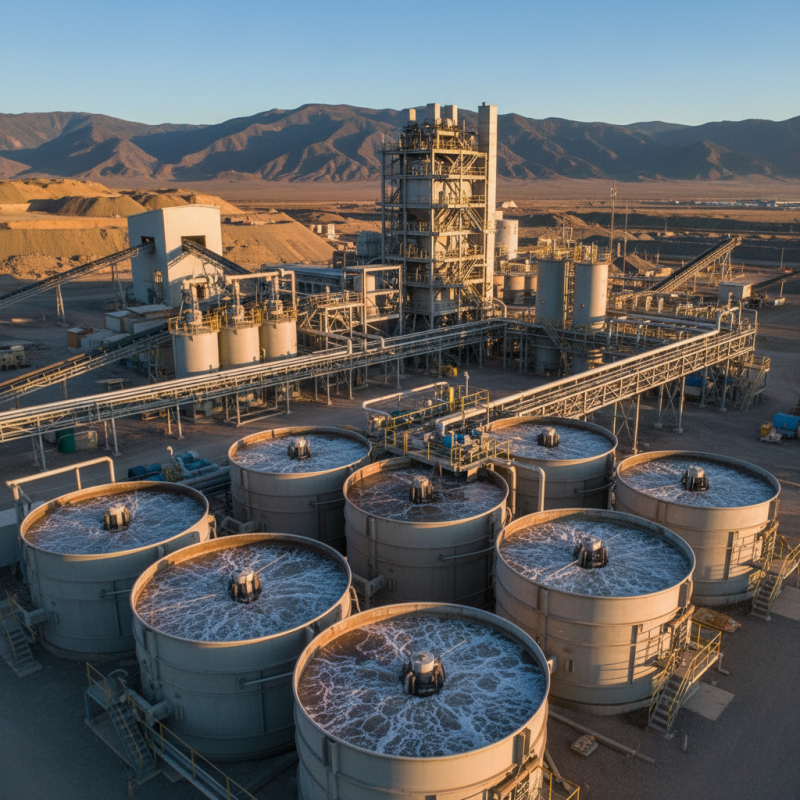
Overview of Flotation Equipment in Mineral Processing
Flotation equipment plays a vital role in mineral processing. It separates valuable minerals from waste material in slurry form. The efficiency of flotation systems largely influences the overall recovery rates of minerals, such as copper, lead, and zinc. According to industry reports, effective flotation can enhance recovery rates by up to 95%. Understanding the various types of flotation cells available is key for improving operational performance.
The most common flotation equipment includes
mechanical cells,
column cells, and
reactor-separator cells. Mechanical cells use air bubbles to attach to minerals, lifting them to the surface. Column cells provide a heightened separation efficiency due to their design, which allows a long residence time. Statistics show that these cells can lead to a
10% improvement in overall recovery when properly operated. However, operators often face challenges, such as
bubble size control and
pulp density, which can affect flotation performance.
Tips:Regular maintenance is crucial for
Flotation Machinery. Monitor operational parameters to prevent inefficiencies. Testing different reagents can help optimize flotation. Adapt and adjust your approach based on observed data. This will allow for continual improvement in mineral recovery rates and overall process effectiveness. Engaging with peers in the industry can lead to valuable insights, which might reveal blind spots in your current operations.
Criteria for Selecting Efficient Flotation Equipment
Choosing the right flotation equipment is crucial for enhancing mineral processing efficiency. Look for equipment that offers adjustable air flow rates. This allows for better control over flotation conditions. Efficiency can also be improved by selecting machines that maintain stable froth levels. Consistency in froth quality is essential for separation.
Another important criterion is the ease of maintenance. Equipment that requires less downtime is preferable. Operators should ensure the equipment supports quick and safe access for routine servicing. Additionally, consider the energy consumption of the machines. High energy use can offset any gains from improved performance.
Training and operator experience also play a key role in using flotation equipment effectively. Even the best machines can underperform if the staff lacks proper knowledge. It's vital to regularly review the process and adapt the equipment to evolving needs. Always be open to seeking improvements. Remember, efficiency is an ongoing journey, not a destination.
Top 10 Flotation Machines and Their Unique Features
Flotation equipment plays a crucial role in mineral processing. These machines separate valuable minerals from unwanted materials. Each model boasts unique features designed for efficiency and high recovery rates. The right flotation machine can greatly enhance processing outcomes.
The top flotation machines include various designs such as mechanical, column, and agile flotation systems. For instance, mechanical flotation cells offer robust air dispersion capabilities. These cells typically achieve recovery rates exceeding 90%. In contrast, column flotation machines excel in fine particle separation. They can efficiently process materials with a particle size below 10 microns, which is essential in today’s mining operations.
Despite their advantages, challenges remain in optimizing flotation processes. Consistent control of parameters like pH and temperature is necessary. A slight variation can lead to suboptimal recoveries, highlighting the need for continuous monitoring. Data indicates that 15% of flotation operations encounter inefficiencies due to poor parameter management. Thus, while flotation machines provide technological advancements, ongoing training and adaptation are essential for achieving the best results.
Top 10 Flotation Equipment for Efficient Mineral Processing
| Flotation Equipment | Capacity (m³/h) | Air Flow Rate (m³/min) | Power Consumption (kW) | Unique Features |
| Mechanical Flotation Cell | 15 | 1.5 | 20 | Robust design, high shear rates |
| Column Flotation Cell | 12 | 1.2 | 18 | Minimal turbulence, better selectivity |
| Jameson Cell | 10 | 1.0 | 15 | High intensity mixing, energy efficient |
| TankCell | 20 | 2.0 | 25 | Flexible design, large volume |
| Dissolved Air Flotation (DAF) | 8 | 0.8 | 12 | Effective in clarifying water, compact size |
| Reactor Separator | 5 | 0.5 | 10 | High recovery rates, optimizable design |
| Flotation Mini Cell | 3 | 0.3 | 5 | Ideal for small operations, modular design |
| SkimAir Flotation Cell | 7 | 0.7 | 9 | Fast flotation kinetics, low operating cost |
| CrossFlow Classifier | 6 | 0.6 | 8 | High efficiency, low footprint |
| HydroFloat Separator | 9 | 0.9 | 11 | Combines flotation and sedimentation |
Comparison of Flotation Techniques Used in Industry
Flotation techniques play a crucial role in mineral processing. These methods separate valuable minerals from gangue effectively. Common flotation types include mechanical, column, and froth flotation. Each has distinct benefits and limitations.
Mechanical flotation is the most widely used. It employs mechanical agitation to enhance bubble formation. However, its efficiency can be affected by the particle size of the minerals. Column flotation, on the other hand, offers better separation for fine particles. The design allows for a deeper froth layer, which can improve recovery rates. Yet, it requires more careful operational control, which can be complex.
Froth flotation is notable for its simplicity but may not be suitable for all ores. The reliance on chemical additives can lead to variability in results. Over time, operators learn to troubleshoot these inconsistencies. Understanding the unique properties of the ore being processed is essential. It allows for better technique selection and ultimately improves overall efficiency in mineral processing.
Top 10 Flotation Equipment for Efficient Mineral Processing
Future Trends in Flotation Equipment Technology
The future of flotation equipment technology is promising. Innovations in automation and artificial intelligence are transforming mineral processing. Smart flotation systems are emerging, allowing for real-time data analysis. This leads to increased efficiency and reduced costs.
Sustainability is another key trend. Manufacturers are focusing on eco-friendly materials in equipment design. This shift helps decrease the environmental impact of mining operations. It is crucial for companies to adapt or risk falling behind in a competitive market. However, integrating new technologies can be challenging. Training staff and adjusting to changes require time and resources.
Moreover, the need for effective recovery rates remains critical. New flotation methods aim to enhance mineral recovery, but results can vary. Trials are essential to understand the efficacy of these methods. Balancing innovation with tried-and-true practices is necessary. The journey towards optimal flotation technology is ongoing, with much to learn.