How to Choose the Right Plastic Bag for Your Business?

Choosing the right Plastic Bag is not a small purchasing detail. It affects product protection, customer experience, storage, and day-to-day costs. A bag that looks sturdy on a sample table may stretch, split, or feel awkward when filled with real products. The right choice depends on what your business sells and how each bag will be used.

Packaging scholar Dr. Susan Selke’s work emphasizes that packaging choices involve trade-offs between product needs, materials, and practical performance. That is a useful lens for this decision. There is no single best bag for every business. A bakery may need a clean, food-suitable option that handles light, warm items. A clothing shop may care more about appearance, handles, and carrying comfort. For heavier goods, thickness and bag dimensions deserve closer attention. Small details matter: a sharp product corner can strain a side seam, while excess bag space can make a package harder to carry.

Start with the job the bag must do. Consider product weight, dimensions, storage conditions, printing needs, and how customers will carry it. Then compare material, thickness, handle style, and supplier specifications. Ask for samples, fill them as customers would, and check the seams and handles. It sounds obvious, but this step is often skipped. A sample test cannot answer every question, and supplier descriptions may not match your busiest day. Still, careful testing can reveal problems before a large order arrives. This guide explores the main choices, common trade-offs, and practical checks that help businesses select a Plastic Bag suited to real use—not just a product photo.
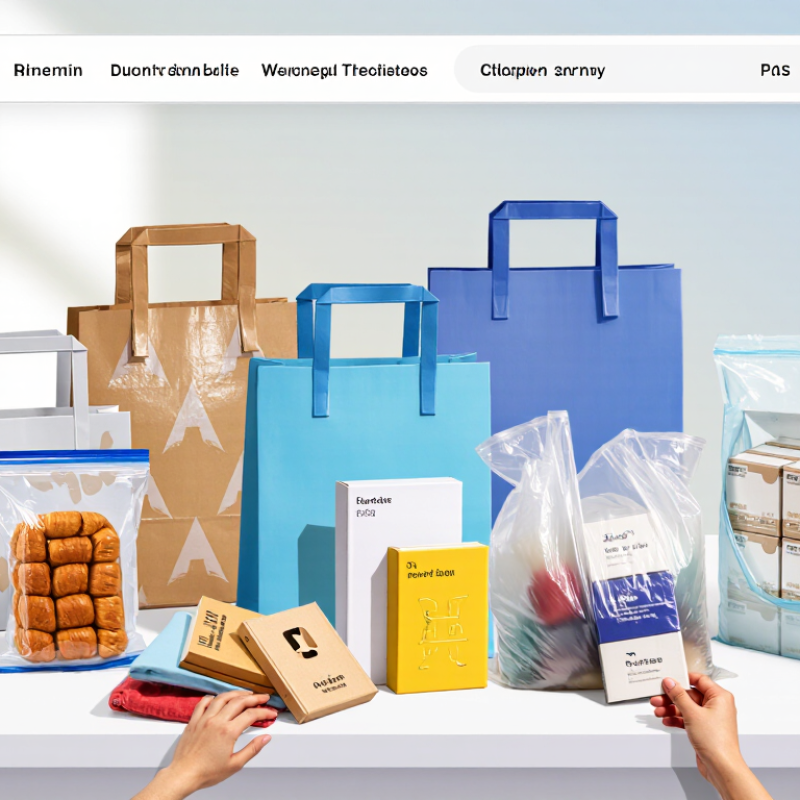
How to Choose the Right Plastic Bag for Your Business?

Understanding the Main Types of Plastic Bags

How to Choose the Right Plastic Bag for Your Business?

Understanding the Main Types of Plastic Bags

Plastic bags are not interchangeable. Low-density polyethylene (LDPE) bags feel soft and flexible, making them suitable for produce, apparel, and lightweight retail items. High-density polyethylene (HDPE) bags are stiffer and more resistant to punctures, so they work well for groceries and heavier products. Linear low-density polyethylene (LLDPE) offers stronger stretch and tear resistance, often helping during transport. Polypropylene bags provide clarity and a crisp appearance, but they may not suit every sealing process.

Material choice should follow the product, not habit. Check weight, moisture exposure, sharp edges, storage temperature, and sealing equipment. A small bakery may need a clear, food-contact bag with reliable heat sealing. A hardware supplier may need thicker film and reinforced handles. Thickness alone can mislead. A thin, well-designed bag may outperform a thicker one, although poor handling can still cause failures.

The OECD Global Plastics Outlook (2022) reports that global plastic waste reached 353 million tonnes in 2019, while only 9% was recycled. This figure makes material efficiency worth measuring, not merely mentioning. Ask suppliers for film specifications, recycled-content evidence, and testing records. Reusable formats may work in controlled delivery systems, but they are not automatically better in every situation. That assumption deserves challenge. A practical trial with filled bags, rough shelving, and one week of handling often reveals weaknesses that a product sheet misses.

Identifying Your Business’s Packaging Requirements

Choosing a plastic bag starts with the product, not the bag catalog. In my packaging trials, small details often caused expensive failures. Record product dimensions, weight, surface texture, and expected filling temperature. A soft garment needs different support than a box with sharp corners. Measure the filled product, not the empty sample. Leave room for a reliable seal. Too much space can waste material and reduce stability.

Map the journey from packing table to customer. Will bags face rain, freezer air, warehouse stacking, or repeated handling? Moisture resistance matters for bakery ingredients, clothing, and household goods, but ventilation may matter more for fresh produce. Check whether the bag needs a flat bottom, side gussets, a drawstring, or reinforced handles. Ask workers to perform a short loading test. Their feedback may reveal awkward grips or slow sealing steps that specifications miss.

Material choice should match disposal conditions and customer expectations. Confirm thickness with drop, tear, and seal tests rather than relying on appearance. Request documented material information and keep sample records for future comparison. I once favored a thinner option because it felt efficient; it failed when packed tightly. That mistake changed our testing process. Requirements also change seasonally, so review damaged returns, storage notes, and customer complaints every few months. The right bag is still a compromise.

How to Choose the Right Plastic Bag for Your Business? - Identifying Your Business’s Packaging Requirements

Business Requirement Recommended Bag Type Typical Material Key Specifications Main Benefits Important Considerations
Lightweight retail purchases T-shirt handle bag HDPE or recycled HDPE Approx. 10–20 microns; common sizes include 30 × 40 cm and 40 × 50 cm Low material use, easy storage, efficient for high-volume checkout Lower puncture resistance; confirm local regulations on single-use bags
Heavy groceries or hardware Reinforced die-cut or soft-loop handle bag LLDPE or thicker recycled polyethylene Approx. 40–80 microns; reinforced handle and bottom seal Higher tear strength, improved load capacity, more comfortable carrying Uses more material and may cost more per unit
Food, bakery, and takeaway items Food-contact carrier or flat-bottom bag Food-contact approved PE or PP Leak-resistant seal; optional gussets; suitable for the intended temperature range Helps prevent leakage and supports hygienic transport Verify food-contact compliance and avoid unsuitable contact with hot or oily foods
Apparel and e-commerce shipping Self-seal courier mailer Co-extruded LDPE or recycled LDPE Approx. 50–100 microns; tamper-evident adhesive strip and optional return strip Lightweight, water-resistant, private, and easy to dispatch Not ideal for sharp or fragile products without internal protection
Small parts and component organization Resealable zipper bag LDPE or PP Approx. 40–100 microns; zipper closure with writable label area Reusable closure, clear visibility, and convenient inventory control Choose the right closure strength and size to prevent spills
Waste collection and facility use Drawstring or star-sealed refuse sack LDPE, HDPE, or recycled polyethylene Approx. 20–60 microns; select capacity from 20 L to 240 L Efficient closure, odor containment, and improved handling Match thickness and capacity to waste type; do not overload
Premium presentation and reusable shopping Reusable soft-loop or boutique bag Thick LDPE, HDPE, or recycled plastic Usually 60–120 microns; reinforced handle and optional gusset Durable, visually attractive, and suitable for repeated use Higher purchase cost; reuse depends on customer behavior and bag durability
Moisture-sensitive products Barrier or coated packaging bag Multi-layer PE film or PE with barrier layer Select film structure based on moisture, oxygen, light, and seal requirements Improves product protection and shelf-life performance Multi-layer structures can be more difficult to recycle; check disposal options
Selection Checklist: Confirm the product weight and dimensions, required load strength, moisture or leakage risk, closure method, food-contact requirements, storage conditions, legal restrictions, recycled-content goals, and end-of-life disposal options before placing an order.

Comparing Bag Materials, Thickness, and Durability

Choosing a plastic bag starts with the product, not the lowest quoted price. In warehouse trials, a thin bag may hold dry goods well but fail around sharp corners. That small tear can become a costly return.

Polyethylene remains common because it bends, seals, and tolerates moisture. Low-density polyethylene feels softer and stretches more, while high-density polyethylene feels stiffer and crisper. Recycled content can improve resource efficiency, but consistency may vary between batches. Ask for documented specifications and samples before placing a large order. Compare thickness in microns, not vague terms such as “extra strong.”

Thickness matters, yet it is not the whole durability story. A thicker film can still split if the seal is weak or the bag is overloaded. Lightweight clothing may need moderate thickness, while dense hardware needs stronger film, reinforced handles, or a gusseted base. Test filled bags on the actual packing line. Lift them, stack them, and leave them overnight. Check punctures, stretching, seal separation, and handle comfort. Measure thickness at several points because uneven film creates weak spots. Looks can mislead.

I once approved a bag that passed a desk test but failed during winter delivery. The film became less flexible in the cold. That mistake changed our checks. Record product weight, edge sharpness, storage temperature, and carrying time. Then compare samples using the same load and handling routine. A micrometer and a simple drop test often reveal more than appearance.

Choosing the Right Size, Features, and Printing Options

How to Choose the Right Plastic Bag for Your Business?

Bag selection should begin with the product, not the artwork. Measure the item’s length, width, and height, then allow room for easy loading. A gusseted bag suits bulky goods, while a flat bag works for documents or thin products. Check the bag’s thickness against the expected weight. A heavier item needs stronger film and reliable seals. During one purchasing project, I chose a size that looked efficient but felt cramped in use. That mistake increased packing time.

Tips: Test samples before ordering in bulk. Fill each bag with the real product and carry it several times. Check the handles, seams, opening, and storage space. Ask for clear material specifications, including thickness, seal strength, and recycled content. Requirements may differ by product and location, so verify current packaging rules with qualified local sources.

Printing should support recognition without weakening the bag’s function. Simple artwork usually produces cleaner results, especially on flexible film. High-contrast colors improve readability under shop lighting. Leave space near handles and seals, where distortion can affect text. Confirm the printing method, color references, and proof before production. A physical sample is more dependable than a screen preview. Still, even careful planning can miss small registration shifts. Review the sample from normal viewing distance, not only under bright office lights.

Evaluating Cost, Regulations, and Environmental Impact

How to Choose the Right Plastic Bag for Your Business?
Evaluating Cost, Regulations, and Environmental Impact

A low unit price can hide higher operating costs. Compare bag strength, size, storage space, and failure rates, not just the invoice. A thin bag may tear under wet food or sharp packaging. Replacements then consume labor and materials. Request samples and test them with your heaviest normal load. Record punctures, leaks, and handle stretching. This practical check often reveals more than a supplier’s specification sheet.

Regulations require careful attention. Requirements may differ by city, state, or country. Check official guidance before ordering large volumes. Confirm rules on thickness, recycled content, labeling, checkout charges, and restricted single-use formats. Keep written evidence from regulators or qualified compliance advisers. Do not trust the word “eco-friendly” alone. It may describe marketing language, not a legal category. Compostability claims can also depend on certified facilities and local collection systems.

Environmental impact begins with the full life cycle. Consider resin quantity, recycled content, transport distance, reuse potential, and realistic disposal. A reusable bag only helps when customers actually reuse it. That assumption deserves testing. Our purchasing team once underestimated storage needs for thicker bags; cartons occupied valuable aisle space. A lighter option reduced storage but failed during peak deliveries. The better choice was not obvious. We had to balance measured performance with local disposal conditions.